ET Intelligence Group: For years, scooters have been adding much-needed zip to TVS Motor. In a three-pony race, new-age scooters have given the southern challenger the prescribed horse power to engage meaningfully with leading bike-makers Bajaj Auto and Hero MotoCorp, which have more evenly spread networks across the country.But the scooter’s seemingly ubiquitous run as urban India’s favoured personal-transport medium is under threat – and so is TVS Motor’s valuation premium over peers.The stock’s consensus earnings for FY20 have been trimmed 12-15 per cent since the beginning of the year. It trailed the Sensex by 6 per cent and 28 per cent, respectively, in the past three and twelve months.Sale volumes fell 5 per cent in June to 297,102 units. Scooter sales declined 3.6 per cent to 99,007 units. Industry growth for scooters has been contracting since FY19 as major markets such as Maharashtra, Gujarat, Karnataka and Kerala are witnessing a slowdown. Scooter sales dropped 0.6 per cent in FY19, the first such contraction in 13 years.The Street is pricing in local scooter volume growth below 5 per cent in FY20.Motorcycle volume growth has been relatively better. However, any significant deviation from normal monsoons may impact volumes in the rural market that makes up half the numbers. Indian Meteorological Department says June rainfall has been 33 per cent deficient. So, the Street is factoring in domestic motorcycle segment volume growth of 5 per cent and 7 per cent for FY20 and FY21.In the first three months of FY20, TVS volumes fell 1 per cent to 8.84 lakh units. The guidance is for 6-8 per cent volume growth, achieving which appears to be an uphill task.First, inventory continues to be higher than average. The Bajaj Auto management said dealer inventory is 7-8 weeks, compared with the usual inventory of 4-5 weeks. Higher inventory also stretches the receivables cycle of the company. TVS Motors’ receivable days rose to 29 days in FY19 from 23 days in FY18.Second, competition will likely increase in the second half due to the transition to BS-VI norms. TVS Motor’s operating margins are among the industry’s lowest. So, it is the most vulnerable to increased competitive intensity.Third, the stock is trading at a 48 per cent premium to mass market two-wheeler makers. This appears rich in a volatile market. In the past few years, TVS enjoyed premium valuation due to the increase in scooter penetration. However, in the past 15 months, the long-term growth trajectory for scooters has reversed. So, the P/E premium of TVS Motor over its peers may also narrow.
from Economic Times https://ift.tt/2FM7oKW

Monday, July 1, 2019

An emerging rivalry
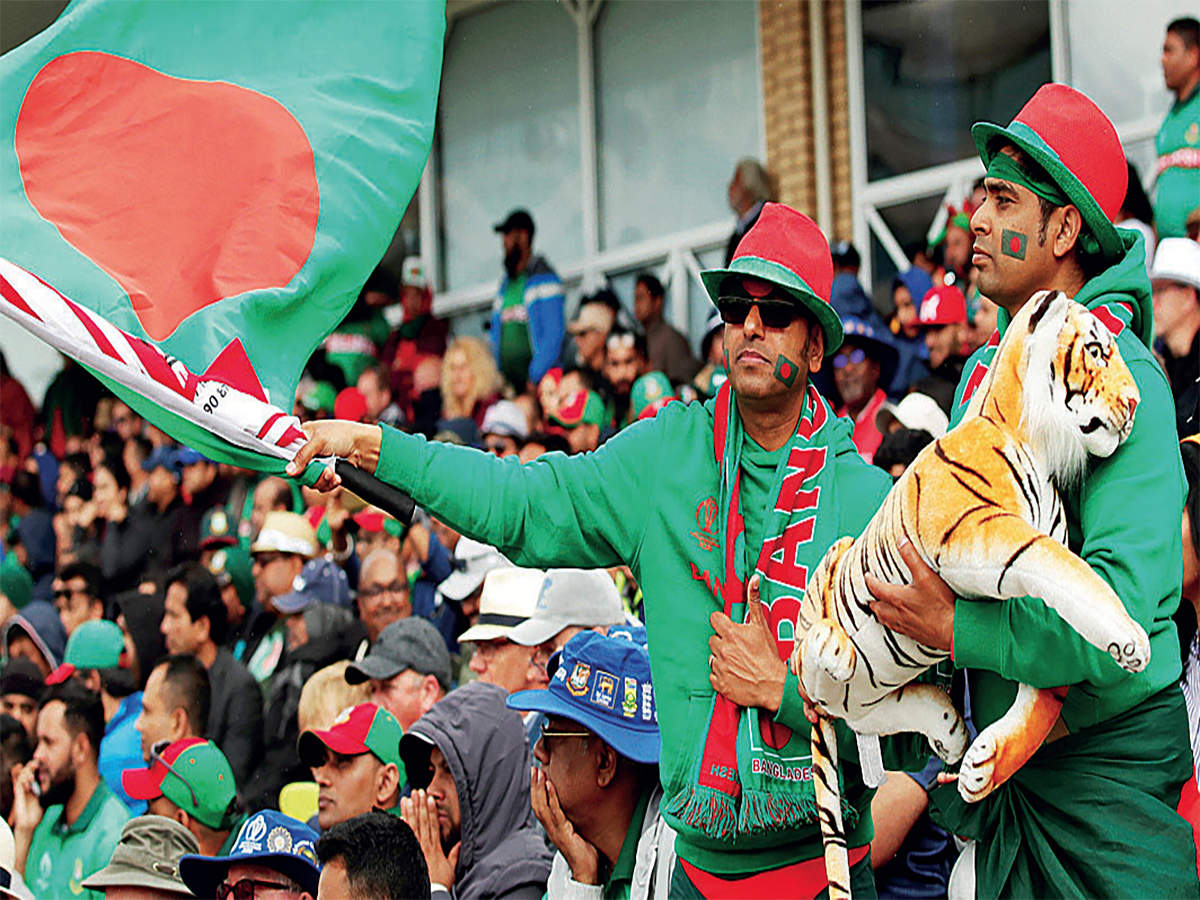 There is no debate it will be a real spectacle. Bangladesh fans will match Indian fans in every way and the number of Bangladesh fans may well outnumber the Indians at Edgbaston.
from Sports-News-Economic Times https://ift.tt/2JgI158
While getting past Lanka, Bangladesh shouldn’t be a big problem, India must rethink their plans for the knockout stage
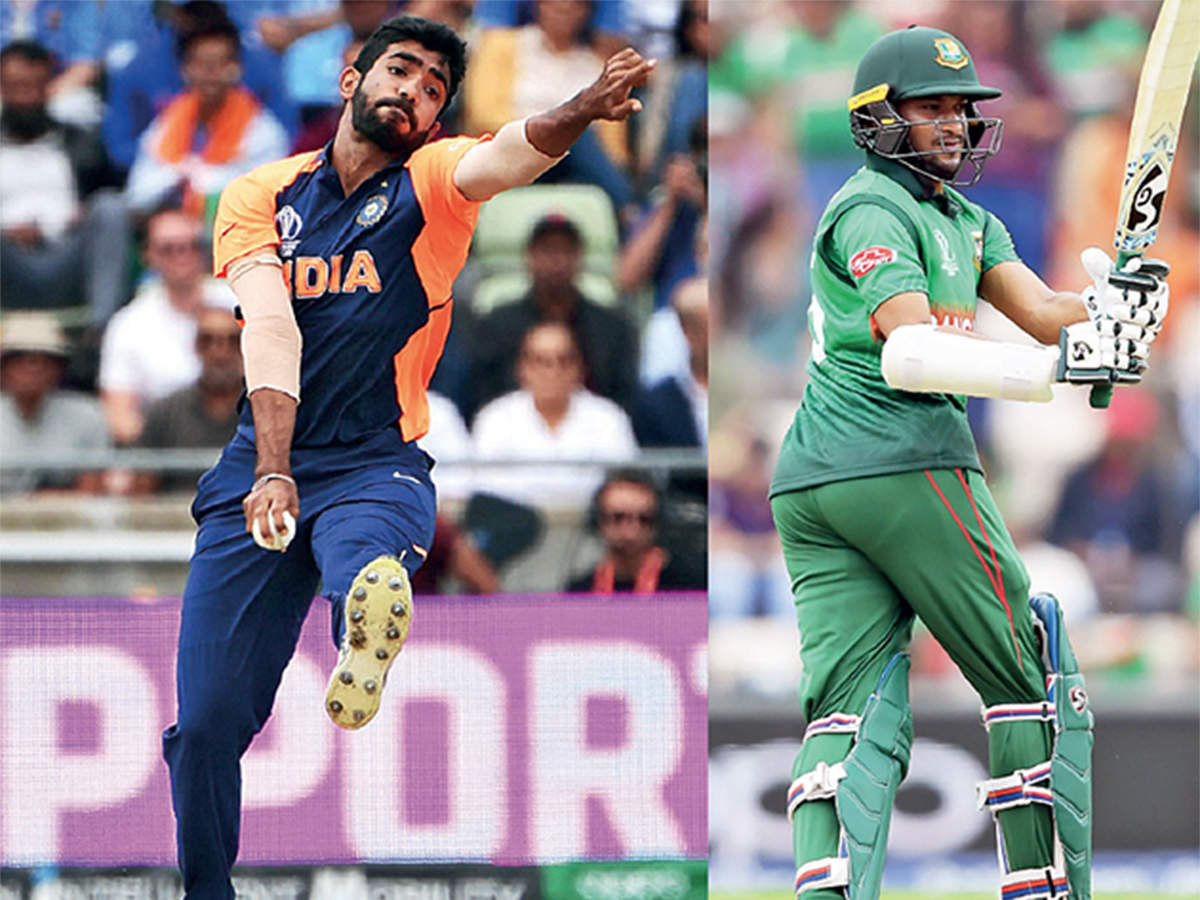 India will have to rethink their plans, for they may still have enough in the bank to get past Bangladesh and Sri Lanka, but there will be no easy opponents in the knockouts.
from Sports-News-Economic Times https://ift.tt/2Xj5wEp
Boxed in by Chinese rivals, Samsung to sack 1K in India
KOLKATA: Samsung will slash about 1,000 jobs in India as the brutal war with Chinese companies forces the Korean giant to cut prices of smartphones and televisions, shaving off margins and reducing its profits, said three senior industry executives who sought anonymity.The executives said the job cuts were part of a cost rationalisation programme undertaken by the country’s largest consumer electronics and mobile phone maker by revenue. Samsung has already laid off 150-odd employees at its telecom networks division and will complete the entire manpower rationalisation exercise by October, they said.A Samsung India spokesperson said the company is committed to India and continues to invest significantly across its businesses. This includes setting up the world’s largest mobile phone factory, investing in R&D and exploring new businesses such as 5G networks, he said.“As we grow, our efforts are leading to more job creation. At the same time, we continue to make our business more efficient and robust for long-term success. For which, Samsung continuously realigns resources as per business priorities. Samsung is committed to job creation and will add manpower through the year,” the spokesperson said.70033696 SAMSUNG INDIA HAS 20K EMPLOYEES“As regards business, with new products across categories, we have been able to consolidate our market share further, and 2019 will be a record year for the company,” the Samsung India spokesperson added.As per industry estimates, Samsung has around 20,000 employees in India.Business heads have already submitted to HC Hong, the president of Indian operations, the names of under-performers and those not delivering targeted results in their teams, said people familiar with the developments. In some businesses and functions, the list makes up about 10% of the total team strength. But there is no fixed number, the executives said.Executives said the manpower rationalisation exercise will encompass sales, marketing, R&D and manufacturing, as well as support functions such as finance, human resources and corporate relations. The exercise has been endorsed by Samsung’s headquarters in Seoul, with the focus now more on generating profit growth — rather than revenue — from India, they said.Samsung India had frozen recruitments since April, which will be reviewed later depending on financial performance during the upcoming festive season, the executives said.Samsung India’s problems started in 2017-18, when it first reported a fall in net profit. As per the latest disclosures with the Registrar of Companies (RoC), the company’s net profit in FY18 fell 10.7% to Rs 3,712 crore while total income grew at a similar pace to Rs 61,065 crore. Financials for 2018-19 are still not available with the RoC, but industry executives said profit growth has remained under strain.ONLINE CHALLENGESamsung has faltered on online smartphone sales, failing to anticipate the rapid growth clocked in this channel since 2016 by brands like Xiaomi and OnePlus. The story was repeated for televisions from end-2017 onward. The online channel currently accounts for 40% of total smartphone sales and 30% of total television sales in India.The company has dropped prices for smartphones and televisions by 25-40% since end-2017 to compete with price-aggressive Chinese rivals and online-focussed brands such as Xiaomi, OnePlus, Vivo, TCL and Realme. The maximum price cuts have been for online-exclusive smartphone models such as the Galaxy M Series and the Super6 Series of ultra-HD smart TVs launched this year.“The price drops have had an impact on the bottom line. Also, the Chinese brands have far leaner organisational structures. For instance, Xiaomi India has just 900-1,000 employees. Hence, the need for Samsung’s cost rationalisation exercise. The layoffs in the network division are aimed at building the team for 5G in India since they currently focus on 4G,” said an executive.Analysts said Samsung has made its smartphone portfolio leaner and a full recovery will depend on consistent performance over the next few quarters.Tarun Pathak, associate director at market tracker Counterpoint Research, said Samsung India has been able to arrest the decline in smartphone market share in the January-March quarter.“A lot will now depend on the performance of the Galaxy M and A Series of smartphones, and how they position these,” he said.As per Counterpoint Research, Xiaomi has 43% share in online smartphone sales as of January-March, followed by Samsung at 15% and Realme at 11%. In the overall smartphone market, Xiaomi again led with 29%, Samsung at 23% and Vivo at 12%, the researcher said.Industry executives said Samsung is the largest player in the overall TV market with around 30% share. However, Xiaomi — quoting IDC data — has claimed to be the largest smart TV brand in India for four quarters with 39% share as of January-March, followed by LG at 15%, Sony at 14% and Samsung at 12%.Samsung India had last resorted to retrenchments in 2015-16, when it laid off several hundred employees after its smartphone sales slowed down owing to the challenge posed by home-grown Micromax and the Chinese brands. While the company had not shared the total number of jobs lost then, media reports had pegged the number at 750-800.
from Economic Times https://ift.tt/2NsSkZ5
from Economic Times https://ift.tt/2NsSkZ5
600MW project no longer feasible: Acme solar to NTPC
BENGALURU: Acme Solar, the largest solar developer in the country, has told NTPC that a 600 MW project it won in an auction is no longer feasible as the power purchase agreement (PPA) stands terminated in the absence of necessary regulatory approvals, and has asked the state-run power major to return its bank guarantee.Acme had won the project in an auction conducted by NTPC last August where it quoted a tariff of Rs 2.59 per unit. Other winners in the auction for 2,000 MW of projects were Azure Power, Softbank-backed SB Energy and Shapoorji Pallonji whose tariffs were also in the range of Rs 2.59-2.60 per unit. According to the terms of the power purchase agreement (PPA) it signed with NTPC, the output was meant for Telangana, and the tariff, trading margin and contracted capacity had to be approved by the Telangana State Regulatory Commission (TSERC) within two months of signing the PPA, failing which it would stand terminated. Telangana was expected to procure the power from NTPC.The two-month deadline has lapsed and Acme has not received confirmation from NTPC about the approval of such tariff. "The PPA stands cancelled and terminated with no liability of Acme to NTPC. Further as the PPA stands cancelled and terminated, we request you to return our BG (Bank Guarantee) immediately in no later than 3 days," Acme said in a letter addressed to NTPC. ET has seen a copy of it.In response, NTPC asked for an extension, which Acme has refused. It reiterated on May 27 that the BG be returned immediately. “Investment made in the project now shall be completely at risk since non-approval of tariff by TSERC would also render the agreement terminated/cancelled without any liability to NTPC,” the letter said. “It is clear that the project has gone in a stage of uncertainty and is not commercially feasible for us to continue with and incur financial liability henceforth,” it continued. ET has seen a copy of Acme's response as well.NTPC did not respond to ET’s queries, while Acme said: “As a policy, we do not comment on specific transactional matters.” The Directorate General of Trade Remedies had imposed a safeguard duty of 25% in July last year. It was announced in the period between the bid submission for the NTPC auction and the holding of the actual reverse auction.NTPC had said it would deduct 31 paise from the final tariff of Rs 2.59 per unit if Acme were to decide it would not bear the impact of safeguard duty.In such a scenario, the tariff payable would be Rs 2.28, the LOI said. In its petition, Acme had disagreed. “Introducing new conditions once the bidding process has been completed is not permissible in law,” it said, in a response to the LOI. Other winners of NTPC’s 2000 MW auction, who quoted similar tariffs, have not opposed NTPC’s condition, and are expected to duly commission their projects sources said.
from Economic Times https://ift.tt/2FIW9D1
from Economic Times https://ift.tt/2FIW9D1
Air India doesn’t have funds to pay employee salaries beyond October
NEW DELHI: Air India won’t have enough money to pay salaries to its employees beyond October amid upcoming debt repayments and plans by the government to sell its 100% stake in the airline, senior officials told ET.“The government had provided Air India sovereign guarantees amounting to Rs 7,000 crore and the airline has about Rs 2,500 crore left, which the airline will utilise soon,” said one official who did not want to be identified.Another government official said the Rs 2,500 crore would be used to clear dues of vendors including oil companies and airport operators and to pay salaries for a few months. Air India’s salary outlay is a little over Rs 300 crore per month and the troubled national carrier has been delaying these payments.“Even May’s salary came over 10 days late,” said a third official on condition of anonymity. 70033694 Air India won’t be the first government owned company without funds to pay salaries. Bharat Sanchar Nigam Ltd., the state-owned telco, is also said to be out of cash to pay employees.“The government is aware about the airline’s financial problems,” said one official.However, the civil aviation ministry has not sought any additional funding for the airline in the budget to be presented on July 5.“It’s the same as the demands made in the interim budget and we are not seeking anything extra for Air India,” said a senior ministry official who did not want to be identified.In the interim budget, Air India Asset Holdings Ltd., a company that holds some of the airline’s debt and assets, was allocated Rs 3,900 crore for the previous and current financial years to service debt. The company had taken on Rs 29,464 crore of Air India’s total debt of Rs 58,000 crore.Meanwhile, Air India is staring at debt repayments of Rs 9,000 crore in the current financial year. Without the ability to service the loans, it had sought the government’s help. However, it seems unlikely that the government will step in at this stage as it works on a plan to divest its 100% stake in the national carrier.The airline may find a partial solution to the problem.“We are working to roll over the repayment of about half of the total debt, which is the working capital debt, to the next financial year. But we cannot do anything about the rest, which is loans against aircraft,” said one official.The government added that repayment of Rs 4,500 crore can only happen if it provides the money.
from Economic Times https://ift.tt/2xpa1hj
from Economic Times https://ift.tt/2xpa1hj
Boxed in by Chinese rivals, Samsung to sack 1,000 in India
KOLKATA: Samsung will slash about 1,000 jobs in India as the brutal war with Chinese companies forces the Korean giant to cut prices of smartphones and televisions, shaving off margins and reducing its profits, said three senior industry executives who sought anonymity.The executives said the job cuts were part of a cost rationalisation programme undertaken by the country’s largest consumer electronics and mobile phone maker by revenue. Samsung has already laid off 150-odd employees at its telecom networks division and will complete the entire manpower rationalisation exercise by October, they said.A Samsung India spokesperson said the company is committed to India and continues to invest significantly across its businesses. This includes setting up the world’s largest mobile phone factory, investing in R&D and exploring new businesses such as 5G networks, he said.“As we grow, our efforts are leading to more job creation. At the same time, we continue to make our business more efficient and robust for long-term success. For which, Samsung continuously realigns resources as per business priorities. Samsung is committed to job creation and will add manpower through the year,” the spokesperson said.70033696 SAMSUNG INDIA HAS 20K EMPLOYEES“As regards business, with new products across categories, we have been able to consolidate our market share further, and 2019 will be a record year for the company,” the Samsung India spokesperson added.As per industry estimates, Samsung has around 20,000 employees in India.Business heads have already submitted to HC Hong, the president of Indian operations, the names of under-performers and those not delivering targeted results in their teams, said people familiar with the developments. In some businesses and functions, the list makes up about 10% of the total team strength. But there is no fixed number, the executives said.Executives said the manpower rationalisation exercise will encompass sales, marketing, R&D and manufacturing, as well as support functions such as finance, human resources and corporate relations. The exercise has been endorsed by Samsung’s headquarters in Seoul, with the focus now more on generating profit growth — rather than revenue — from India, they said.Samsung India had frozen recruitments since April, which will be reviewed later depending on financial performance during the upcoming festive season, the executives said.Samsung India’s problems started in 2017-18, when it first reported a fall in net profit. As per the latest disclosures with the Registrar of Companies (RoC), the company’s net profit in FY18 fell 10.7% to Rs 3,712 crore while total income grew at a similar pace to Rs 61,065 crore. Financials for 2018-19 are still not available with the RoC, but industry executives said profit growth has remained under strain.ONLINE CHALLENGESamsung has faltered on online smartphone sales, failing to anticipate the rapid growth clocked in this channel since 2016 by brands like Xiaomi and OnePlus. The story was repeated for televisions from end-2017 onward. The online channel currently accounts for 40% of total smartphone sales and 30% of total television sales in India.The company has dropped prices for smartphones and televisions by 25-40% since end-2017 to compete with price-aggressive Chinese rivals and online-focussed brands such as Xiaomi, OnePlus, Vivo, TCL and Realme. The maximum price cuts have been for online-exclusive smartphone models such as the Galaxy M Series and the Super6 Series of ultra-HD smart TVs launched this year.“The price drops have had an impact on the bottom line. Also, the Chinese brands have far leaner organisational structures. For instance, Xiaomi India has just 900-1,000 employees. Hence, the need for Samsung’s cost rationalisation exercise. The layoffs in the network division are aimed at building the team for 5G in India since they currently focus on 4G,” said an executive.Analysts said Samsung has made its smartphone portfolio leaner and a full recovery will depend on consistent performance over the next few quarters.Tarun Pathak, associate director at market tracker Counterpoint Research, said Samsung India has been able to arrest the decline in smartphone market share in the January-March quarter.“A lot will now depend on the performance of the Galaxy M and A Series of smartphones, and how they position these,” he said.As per Counterpoint Research, Xiaomi has 43% share in online smartphone sales as of January-March, followed by Samsung at 15% and Realme at 11%. In the overall smartphone market, Xiaomi again led with 29%, Samsung at 23% and Vivo at 12%, the researcher said.Industry executives said Samsung is the largest player in the overall TV market with around 30% share. However, Xiaomi — quoting IDC data — has claimed to be the largest smart TV brand in India for four quarters with 39% share as of January-March, followed by LG at 15%, Sony at 14% and Samsung at 12%.Samsung India had last resorted to retrenchments in 2015-16, when it laid off several hundred employees after its smartphone sales slowed down owing to the challenge posed by home-grown Micromax and the Chinese brands. While the company had not shared the total number of jobs lost then, media reports had pegged the number at 750-800.
from Economic Times https://ift.tt/2NsSkZ5
from Economic Times https://ift.tt/2NsSkZ5
Subscribe to:
Posts (Atom)